Hatha Yoga for beginners can start with simple postures, comfortable breathing and attention to supports. You don't need to be flexible, touch your feet or know Sanskrit names. Adequate practice offers choices and allows you to learn without rushing.
When someone looks for how to start doing yoga at home, they usually find impressive images: people balanced on their arms, legs very wide apart and movements that seem to require years of training. It's easy to conclude that the body should be ready before the first class. A thoughtful introduction to Hatha Yoga begins with another experience: recognizing your supports, realizing how much effort you are using, and finding a way to participate now.
This guide explains what the term means in the context of today's classes, how to choose basic materials, and how to organize a twenty-minute introductory practice. You'll also find adaptations, questions to evaluate an online class, and a flexible plan for the first few weeks. The suggestions are educational, not a rehabilitation program. If there are health or movement restrictions, seek individual guidance to determine what is appropriate for you.
What is Hatha Yoga?
Hatha Yoga is a name linked to traditions of body and breathing yoga practice, with different histories and interpretations. In the daily life of many studios, the term identifies classes in which postures are explored with time for adjustment and perception. This description helps to recognize a proposal, but it is not a universal rule: two classes called Hatha can have very different rhythms, requirements and content.
For the beginner, it is more useful to ask how the class works than trying to choose just by name. Is there time to enter and exit positions? Does the teacher explain alternatives? Can you rest without losing track? An introduction to Hatha may combine postures, pauses and attention to breathing, but the quality of this experience depends on the concrete guidance offered.
Yoga also includes ethical, philosophical and contemplative dimensions. A physical class does not represent the entire tradition, although it can be a gateway. If you want to expand this understanding, read our guide on the eight limbs of yoga. You can study gradually, without needing to master the entire story before trying a simple position.
Hatha, Vinyasa and stretching: how to distinguish proposals
In many classes advertised as Vinyasa, the focus is on chaining movements with a more continuous rhythm. In classes called Hatha, there may be more permanence and explanation between postures. These are trends in name usage, not guarantees. A vigorous Hatha can be more demanding than a gentle Vinyasa class. Therefore, look for information about the specific level and format.
Stretching may be present in yoga, but it does not exhaust the experience. Support, stability, perception of effort and attention can also participate in a posture. You can practice without feeling a big stretch, just like you can stretch outside of yoga. It is not necessary to oppose the activities: they can have different objectives and contexts.
To choose a first class, prefer clear descriptions, such as introductory, with adaptations and a slow pace, accompanied by an explanation of what will be done. Expressions such as detox, complete unlocking or immediate transformation say little about the safety and accessibility of the meeting. A good presentation helps you decide, rather than promising to solve everything.
Before you start: personal possibilities and limits
Consider your usual activities. Can you stand comfortably? Can you sit down and get up from the floor safely? Are there movements that have already been restricted by a professional? These questions help you choose the initial modality. These are not tests to pass or fail. If the floor is not an option, a chair-based class can be a great way to participate.
The NCCIH highlights the importance of adaptations and qualified guidance in the practice of yoga. Health conditions, injuries and individual needs must be communicated to the teacher. This does not mean publicly disclosing your history: you can talk privately and explain only what is relevant for proper guidance.
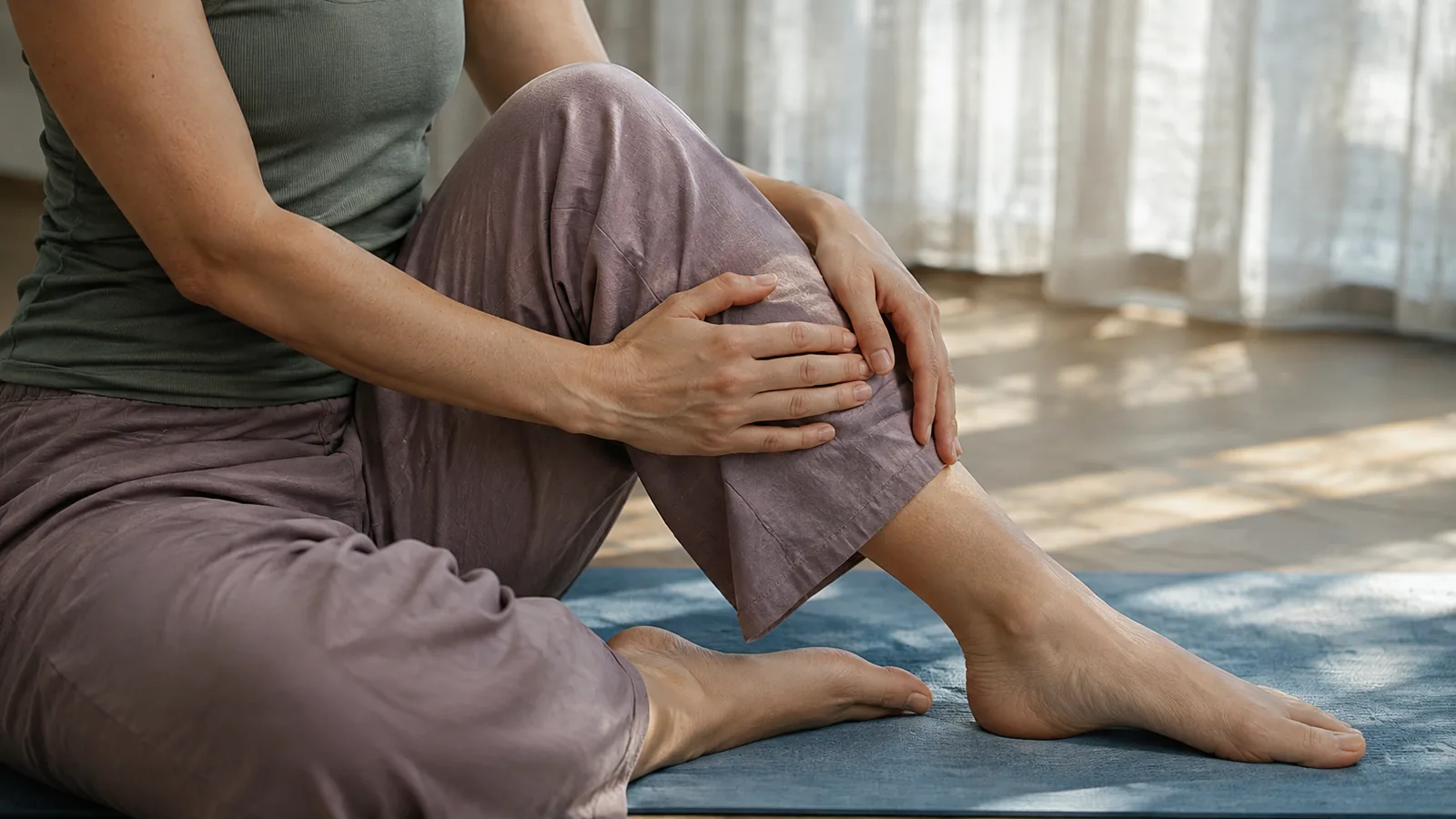
Don't do a pose to find out if a major pain is serious. If pain, dizziness or unusual shortness of breath appear, discontinue the experience. Important acute symptoms require assessment according to severity. Yoga does not require accepting discomfort as part of a process of evolution or personal overcoming.
What you need to practice Hatha Yoga at home
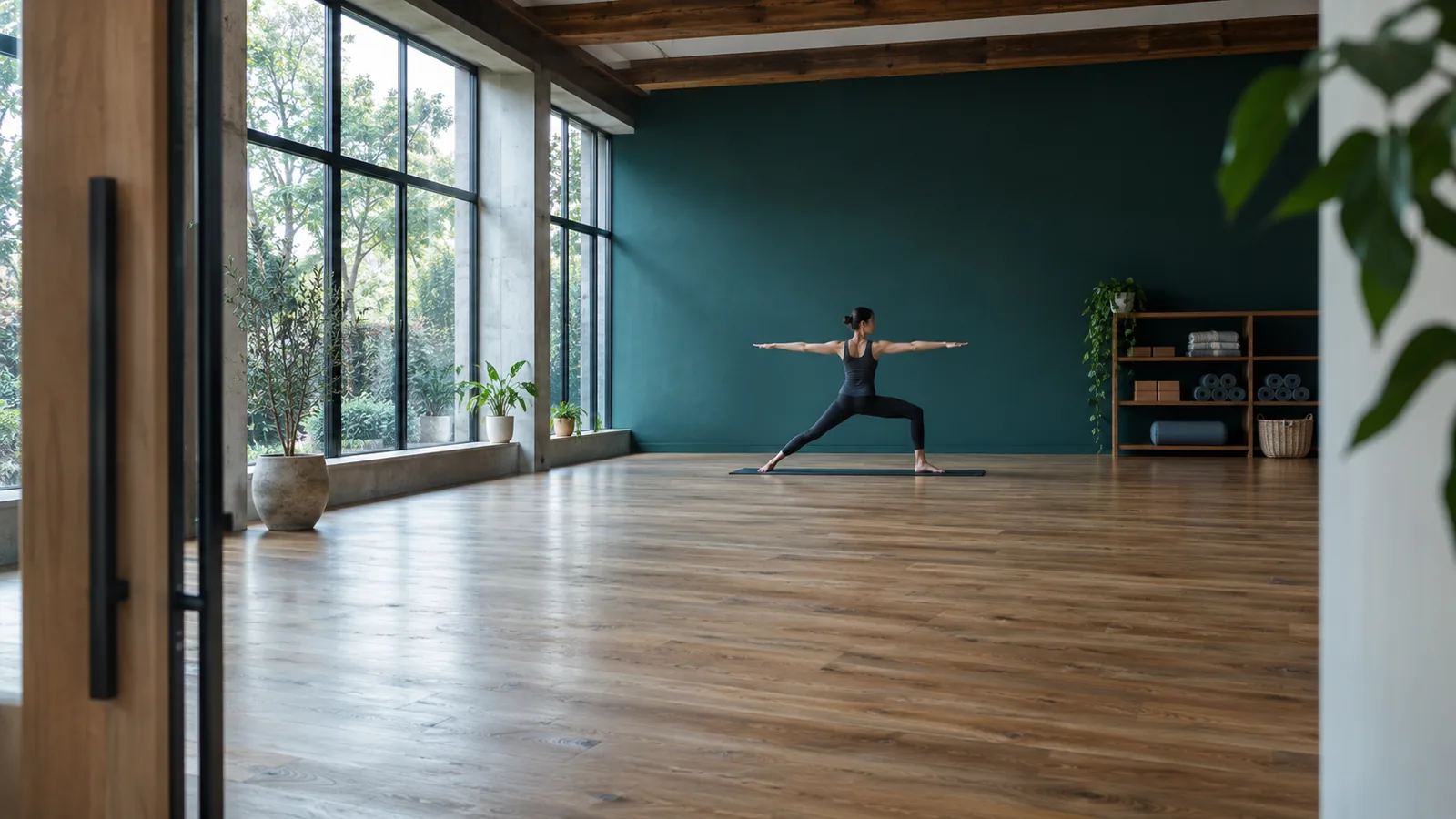
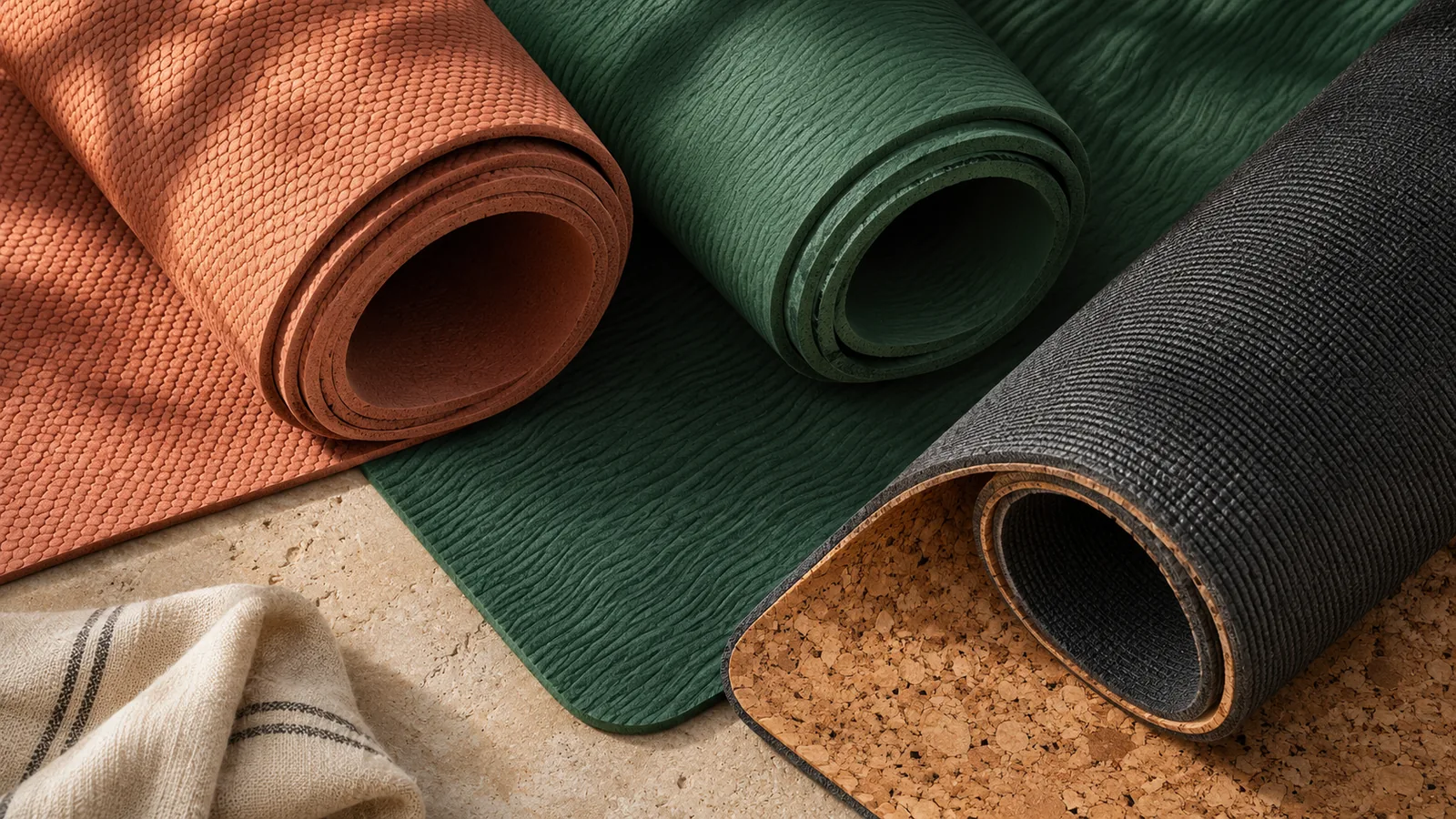
You don't need to buy a collection of accessories before your first experience. A safe space, an appropriate surface, and clothes that allow for comfortable movement are often a more helpful start than a fancy ensemble. The mat must provide adequate grip and remain stable. Check this with small movements before relying on it to support a position.
A free wall and a firm chair can act as supports in specific proposals. Blocks and belts can help when used with a clear purpose, but they should not be used to force amplitude. Do not improvise support with unstable objects or surfaces that could slide. The material needs to reduce the difficulty of organization, not add a new concern.
Leave enough room for your arms and for a smooth transition. Move furniture, animals and objects that may move unexpectedly away. If you use a video lesson, position the screen before starting in a place that won't force you to crane your neck repeatedly. Read the description and watch some excerpts before following the entire session.
Breathing for Beginners: Comfort First
Breathing mindfully does not mean taking in as much air as possible. For the first practice, allow your breathing to follow a comfortable rhythm as you get to know the movements. If coordinating gesture, counting and breathing at the same time gets confusing, simplify. The teacher can guide one thing at a time; You don't need to master all the instructions on the first try.
There's no need to hold your breath, speed up your breathing, or perform vigorous techniques to get started. When a position requires so much effort that you start holding your breath, consider reducing the range or getting out of it. The goal is to learn to measure the experience. A less wide but comfortable stance may offer a clearer starting point.
If focusing on breathing bothers you, keep your attention on another element: the pressure of your feet, the contact of your hands or a visual point. This choice can also support mindful practice. To study the vocabulary calmly, visit the entry on pranayama, without making advanced techniques a requirement for your first classes.
Hatha Yoga postures for beginners: get to know them before delving deeper
Mountain pose: understanding the support while standing
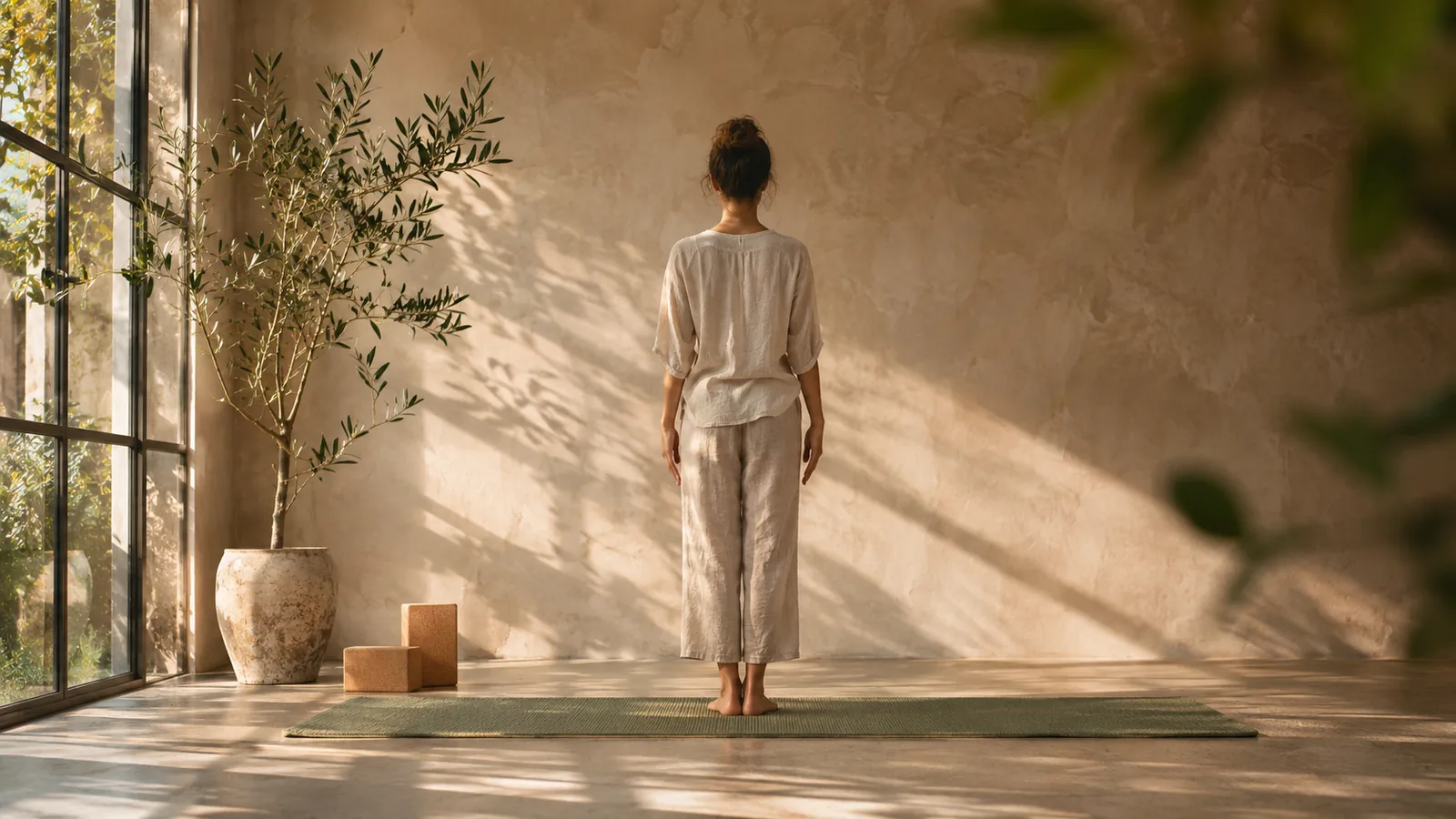
The mountain, often called Tadasana, can be explored as a way to stand mindfully. Keep your feet a comfortable distance apart, your arms loose, and your eyes straight ahead. A wall or other appropriate support may be necessary. You don't need to bring your feet together, lock your knees, or pull your shoulders into a rigid position.
Notice whether you are holding your breath or trying to appear taller. Make a small adjustment and compare. Learning is not about remaining perfectly still: small changes are part of the experience of standing. If this position is not comfortable or safe, use a sitting alternative instead of insisting.
Arms in a width that fits your body
Starting from a stable support, you can try raising your arms to a comfortable height, if this movement suits your shoulders. They don't need to reach overhead. Take a break and return with control. Observe whether the trunk changes position to compensate for an amplitude that seems excessive.
An alternative is to keep your hands at your sides and just notice the movement of breathing. Another is to support your forearms. The principle is to have options that allow you to follow the topic of the class, without feeling that you need to achieve the same form demonstrated by the teacher.
Tilt with support: approach without pulling
Some classes use a firm chair or a wall to explore a slight inclination of the torso. This experience needs to be oriented to your conditions: support does not authorize deep flexion or eliminate individual restrictions. If you have already received a recommendation to avoid certain spinal movements, it remains valid.
In the first experience, the idea is to understand the relationship between feet, hand support and space to breathe. Avoid swinging your body to reach further or pulling yourself with your arms. When there is not enough guidance, it is better to leave this proposal for a guided class than to improvise through the description of a text.
Floor variations: a possibility, not an obligation
Positions on all fours appear frequently in classes, including gentle movements known as cat and cow. However, hands, knees and transitions may require adaptations. Don't assume that a position is easy for you just because it's called basic. People with discomfort in their wrists, for example, may need another proposal.
The teacher can choose a seated exploration of trunk perception, without reproducing exactly the same shape. This adaptation does not need to be visually identical to make pedagogical sense. At home, practice on the floor only if entering, staying and leaving these positions are safe for you.
Rest: learning to organize comfort
At the end of a class, there may be a period of rest, often called Savasana. Lying on your back is a common option, but it is not the only one. You may need to support your head and legs, stand on your side or use a chair. Choose according to your needs, without maintaining a position that creates pain or difficulty breathing.
Rest does not require emptying the mind or remaining still at any cost. You can adjust your body and keep your eyes open. The period allows you to recognize the effect of the experience and make a smoother transition to another activity. It is not a prize reserved for those who have completed all the postures.
How to organize a 20-minute introductory practice
The script below is an editorial organization of time, not a mandatory sequence nor a prescription to treat symptoms. Use it to talk to a teacher and select practices that are already right for you. If you don't yet know the positions or have questions about the transitions, take a guided class first.
Check space and support. Choose to sit or stand and notice how you are doing.
Make few known proposals, with pauses and freedom to adapt.
Find a comfortable position, observe contacts and end without rushing.
In the central stage, you can explore the mountain, simple arm movements and a seated proposal guided by the teacher. You don't need to gather everything you studied. Practicing fewer elements makes it easier to remember the instructions and notice your body's response. The variety can grow later, when the basic choices are more familiar.
When you're done, notice how you feel before getting up or leaving the space. If you feel tired, uncomfortable, or overly concerned about getting it right, scale back the next experiment and talk to the teacher. A twenty-minute script does not need to be maintained just because that number appears in the title of a lesson.
A flexible plan for the first four weeks
First week: recognize the environment and instructions
Choose an introductory class and find out what information is new to you. You may need time to identify right and left on the screen, adjust the mat, or understand when to rest. Keep proposals few and register doubts. The first objective is to build enough familiarity to participate without rushing.
Second week: repeat to notice differences
Revisit a familiar practice rather than looking for a new challenge each session. See if you can find support more easily and if you can choose an alternative before the discomfort. Repeating can reveal aspects that went unnoticed. Don't use comparison to demand that each day be better than the last.
Week Three: Adjust Choices with Guidance
Ask the teacher a specific question: my shoulder is uncomfortable when I raise my arm, can I keep my hands supported? Specific information often helps more than just saying that you are not flexible. From this conversation, adjust one or two proposals, keeping the rest familiar so as not to accumulate new things.
Fourth week: decide what deserves continuity
Evaluate the actual routine, not an ideal version of the schedule. What time was viable? Did the online class offer enough information? Do you prefer face-to-face meetings, a seated practice or smaller sessions? The plan does not end with an advanced posture test. It ends with more clarity on how to keep learning.
How many times a week and for how long?
There is no single frequency for every beginner. The duration, demand of the class, your recovery and other activities need to be considered together. To organize the habit, choose a number of meetings that fit into your life without relying on exceptional effort. You can start with brief experiences and review the organization with the teacher.
The number of minutes doesn't tell the whole story. A short class can be intense, and a longer session can include a lot of rest. Observe what was actually done and how you responded, including afterwards. Instead of simultaneously increasing duration, frequency, and difficulty, modify one aspect at a time when there is a reason to do so.
To reflect on the habit outside of the first class, see our article on daily yoga practice. If your preference is a seated adaptation, see the chair yoga guide. Choosing an accessible entryway can be more useful than insisting on a format that is incompatible with your current situation.
Common mistakes that hamper the experience
Copy the form without understanding the instructions. The photograph shows an instant and does not explain preparation, support or adaptation possibilities. Before trying to reproduce a position, find out what the proposal is and what alternatives exist. Two people can perform different shapes while exploring the same class topic.
Use pain as an indicator of progress. You don't have to pass a warning sign to demonstrate dedication. Ask the teacher how to recognize a comfortable intensity and how to get out of the position. A good class should allow this dialogue, without treating rest as a lack of will.
Hold your breath to stay. When the whole body becomes an attempt to support the pose, it may be time to simplify. Reduce time, find support or choose the alternative. The goal of an introduction is to build understanding, not collect seconds of endurance.
Turn accessories into shortcuts to strength. A belt shouldn't pull you beyond a comfortable range, and a block needs to be on a stable base. Ask for an explanation of the function of each resource. Using less material clearly is preferable to stacking objects without knowing what problem you are trying to solve.
Judge practice by flexibility alone. You may be learning to sense effort, choose support, and communicate discomfort before you notice any change in range. These capabilities are also important for participating in a class independently. They don't easily fit into a before and after photograph.
How to Choose an Online Hatha Class for Beginners
Look for presentations that explain duration, level, materials, and type of participation. Observe whether the teacher demonstrates inputs and outputs, provides time to organize supports, and uses understandable instructions. A well-positioned camera helps, but the value of the class also lies in what is explained when the movement is not comfortable.
In a live class, ask how to communicate restrictions and whether there will be room for questions. In a recorded video, remember that the person on the screen is not evaluating your execution. Pause when you need to and don't interpret general phrases as an individual recommendation. If the practice tends to generate insecurity, consider closer monitoring.
Be wary of promises of cures, quick weight loss or guaranteed results within a fixed period of time. Training and experience must be presented in a verifiable manner, without invented titles. You have the right to ask about the approach and decide that the class is not suitable, even if it is popular or visually very appealing.
Frequently Asked Questions about Hatha Yoga for Beginners
Do I need to be flexible to do Hatha Yoga?
No. Practice needs to offer possibilities for different ranges. You can keep your knees bent, use supports when appropriate, or choose another position. Flexibility is not an entry condition nor the only dimension of learning. The important thing is to find guidance that respects your body and your needs.
Is Hatha Yoga always a light class?
No. The name is used for classes with distinct characteristics. Ask about pace, demands and adaptations, especially if you are just starting out. An objective description of the encounter helps more than assuming that every Hatha class will be smooth or that every Vinyasa will be fast.
Can I learn alone at home?
Online materials can support study, but are not a substitute for individual assessment and guidance when necessary. Start with simple proposals and clear instructions. If there is pain, health restrictions or difficulty in transitions, seek assistance. It is not necessary to insist alone to demonstrate independence.
Is it mandatory to do the Sun Salutation?
No. There are many ways to organize a practice. The Sun Salutation brings together transitions that may require adaptations and does not need to be part of the first class. If you are interested, consult our Sun Salutation guide and discuss the options with your teacher.
Does Hatha Yoga replace all other physical activities?
It is not appropriate to assume this. The intensity and content of classes vary greatly, and your physical activity needs may include different components. Consider the routine as a set and seek qualified guidance to organize specific goals, especially when there is a health condition.
How do I know if I'm learning?
See if you understand the instructions better, find support more easily and recognize when to rest. You may also be more comfortable asking questions and choosing accommodations. Learning does not require performing a visually advanced position or repeating someone else's experience.
Practice begins with the encounter between attention and possibility. Choose support, understandable instruction and a rhythm that allows you to hear what happens. The rest can be learned over time.
Sources and editorial context
Safety guidelines and the distinction between wellness practices and treatment should be further explored in the NCCIH material Yoga: Effectiveness and Safety. The twenty-minute script and the four-week plan are editorial proposals for organizing learning, not clinical protocols or guarantees of results. This article is not presented as a medical review or as a supervised individual lesson.